Showing posts with label eat your heart out. Show all posts

Friday, August 05, 2016

Bruschetta Pizza

When you buy 22 pounds of tomatoes at the farmers' market and your basil bush stands as tall as your waist, there's only one thing to do:

 
OK, there are a lot of things to do :) ...but bruschetta pizza should be at the top of the list! It's long past time for me to share one of our very favorite summer recipes.

The crust can be as simple or as complicated as you want it to be. Refrigerated pre-made crust, if you're into that. Your own favorite homemade recipe. We love this one--because it's healthier (made with whole wheat flour), it's heartier (you need a substantial crust if you're going to pile on this many juicy tomatoes), and it's full of flavor. It's also quicker than many homemade pizza crusts, due to a unique but effective method of force-rising the dough in the microwave on 10% power.

You then top the crust with sausage (which is also much easier to make than you think) and mozzarella. No sauce--you're going to dump fresh tomatoes alllllll over it instead.

So let's get started...

Homemade Whole Wheat Pizza Crust

3 cups whole wheat or white whole wheat flour
1 tsp sugar
1 tsp salt
1 pkg instant yeast (about 2 1/4 tsp)
1/2 cup parmesan cheese
2 tsp dried oregano
2 tsp dried basil
1/2 tsp garlic powder
1 cup + 2 T warm water
2 Tbsp olive oil

Measure flour, sugar, salt, yeast, cheese, garlic, and oregano into the bowl of a stand mixer or food processor and mix well. With dough hook (or processor blade), while the mixer is running, slowly add warm water and oil; mix until dough forms a ball. Mix for an additional minute. If dough is too sticky to roll into a ball, add a little more flour.

Turn dough out onto a floured surface, and knead lightly 4 or 5 times. Add a little olive oil and shape dough into a ball, then poke a hole through the center (so that it resembles a fat donut). Place dough in microwave-safe bowl and cover with a plate.

Preheat oven (with baking stone inside) to 400 degrees. Fill a small glass measuring cup with water and place in back of microwave. Place dough bowl in center of microwave and heat on LOW (10% power) for 3 minutes. Let stand, covered, in microwave for 3 minutes. Repeat this procedure two more times, allowing 6 minutes for the last standing time.

Turn dough out onto a floured surface, and knead lightly 4 or 5 times. Divide into half (for a thicker crust) or thirds (for a thinner, almost crispy crust). Working with one portion at a time, use roller or hands to shape into pizza crust.

Transfer crust on preheated baking stone and bake for 10 minutes, or until crust just starts to brown. Remove from oven; add sauce + toppings and return to oven, baking until cheese melts and crust is browned on bottom (10 minutes).


Bruschetta Pizza toppings
1/2 lb sausage (more or less), browned and drained
2 cups shredded mozzarella (more or less)
tomatoes--maybe 4-6?
fresh basil
minced garlic
balsamic vinegar
salt

When you take the parbaked crust out of the oven, top with sausage and mozzarella and bake until cheese is melted (we like to broil for a couple of minutes at the end so the cheese gets nice and brown).

The bruschetta mixture is a loose recipe, mostly to taste; it depends on how generous you want to be with your topping and how much you like fresh basil. The photo with the original recipe was laughable, with a tiny sprinkling of tomatoes almost as a garnish. Me, I like it when I can barely see the pizza underneath the giant pile of tomatoes--probably one smallish tomato per slice of pizza! The great thing is, if you end up with too much, you can use the leftovers for traditional bruschetta (toasted slices of bread) or stick it in the freezer and use it in soup this winter.

Basically, you dice up several tomatoes and chop up as much fresh basil as you prefer. Add in minced garlic (maybe two cloves for a whole pizza), a splash of vinegar, and a little salt. Mix well and spoon over individual slices of pizza at the table. This is one pizza you'll definitely want to eat with a fork.

Thursday, March 31, 2016

Florence Day 10: Dinner at Il Latini

Not only had Il Latini had come up on several must-try Florence restaurant lists, our B&B host also recommended it, saying he had been eating there since he was a kid. Since it was only a block or two from where we were staying it, we definitely wanted to eat there on our last night in Italy.


Our Lonely Planet guidebook said the restaurant had two seatings and that reservations were a must. But when we asked our host if he would make reservations for us, he said they didn’t take reservations. Just get there for one of the seatings (7:30 or 9:30) and be prepared to wait 5-10 minutes, he said.

We arrived extra early, around 6:45, and a few students were already standing outside. The wait staff were sitting inside eating dinner in full view of everyone on the street; the doors were locked. A crowd began to form in front, and of course since this was Italy, there was no orderly queue, just a growing mob of people ready to stampede.


No one seemed to know what was going on or how the whole thing worked, and as we stood there reading Yelp reviews and waiting, we grew increasingly uncertain and nervous. The wait staff took their sweet time eating and drinking and smoking, completely ignoring the crowd. 


Finally around 7:30 someone came to the door, reassured us that there was plenty of room for everyone, and said to stand back. But as soon as he unlocked it, pandemonium ensued. We had been waiting longer than anyone else except one party of eight, but after they got in first, everyone began crowding and people pushed past us. Mass chaos.

Sure enough, though, the restaurant was bigger than you could see from the entrance, and everyone seemed to get in. The tables were pushed together so closely that we felt like we were eating at a table of six, with strangers. The place seemed to be filled with tourists, and it was incredibly loud.

Our food was definitely not the best we had in Italy, but I think that had everything to do with our preferences and what we ordered, not with the quality of the restaurant.

For our antipasto, we ordered caprese salad and were disappointed to find the mozzarella and tomatoes came with lettuce but no basil (doesn’t caprese always include basil?).


As a primo piatto, we ordered the zuppa mista, eager to sample three traditional Tuscan soups, but we didn’t care much for any of them. It was mainly a texture thing for me.

pappa al pomodoro // photo: TripAdvisor
zuppa di fagioli col grano faro (soup with beans and farro grain)
minestrone

Our secondo piatto, however, was phenomenal. The agnello arrosto (roast lamb) was one of the best meats we ate in Italy. 
 

Dessert, a raspberry tart, was not as delicious as it looked:
 

...but we also received complimentary biscotti e vin dolce (cookies and sweet wine) and the cookies were yummy.


The really bizarre part was, it seemed like the whole “two seatings” thing was a myth. The whole time we were there, they continued to seat people as tables opened up. And when we left the restaurant around 9:20, there were plenty of empty tables and no one standing outside. We couldn't help wondering if the whole “two seatings” thing is a huge joke on the tourists! Maybe the staff/owners get a kick out of seeing a crazy mob at 7:30, and the locals know they can then just come later without all the drama?

Moral of the story: go late.

Wednesday, March 30, 2016

Florence Day 10: Heart of the City Walk

After touring Palazzo Vecchio and the Bargello museum on Wednesday morning, we grabbed lunch and headed back to our B&B for a bit of rest and to wait out the rain. Lunch was panini from I Due Fratellini ("the two brothers")--a literal hole in the wall that has been in business since 1875. Twenty-nine kinds of sandwiches, only €3 each! Not to mention a large wine selection.
When the brothers saw me taking a photo of their shop as we walked away, they stopped and posed :)
We'd been told to expect long lines, but didn't have to wait at all. The sandwiches were so cheap that we chose three different kinds to try. Below, top to bottom: pancetta e peperoni arrosto (cured meat with roasted peppers--note that uncooked pancetta, while translated "bacon" in an English menu, does decidedly *not* taste or feel like bacon); bresaola e rucola (cured beef and arugula--or as the English menus translate it, "rocket salad"!); and crudo, mozzarella (ham and cheese). These were all just OK because, no salt in the bread! Ugh! I don't care how salty the meat is, The Bread. Needs. Salt.
The photo on the right is the view from the window of our B&B room--in the distance is Piazza Santa Maria Novella.

Thankfully the rain let up after a little while and we were able to go exploring again. Unfortunately because of our pre-scheduled wine tour smack in the middle of our time in Florence, we weren't able to maximize the use of our Firenze Cards. So that's another pro tip for you: If you are going to venture out into Chianti wine country or to Pisa or Cinque Terre (there are so many interesting day trips to make from Florence), schedule that on the first or last day of your trip. Firenze Cards are only good for 72 hours from the moment of activation, so after we'd activated ours on Sunday, we essentially "wasted" all of Monday while out in the countryside and then they expired at 2PM Wednesday, when we still had several more hours available for sightseeing.

So, since we didn't have time to do any more museums, we used our Lonely Planet pocket guide to go on a "Heart of the City" walk. The guidebook says:
"Every visitor to Florence spends time navigating the cobbled medieval lanes that run between Via de Tornabuoni and Via del Proconsolo but few explore them thoroughly, instead focusing on the major monuments and spaces. This walk will introduce you to some less visited sights and laneways."
The walk begins at Piazza della Repubblica, which was the site of a Roman forum back in the day and was also the heart of medieval Florence. The square in its current incarnation was created in the 1880s (quite controversially, as it involved displacing nearly 6000 people).


From there we walked to Chiesa Orsanmichele, a church created in the 1300s by walling in an old grain market. Unfortunately many of these smaller churches did not allow photography inside, so I don't have a ton of pictures. 

photo: flickr.com/shirleydejong


Next was Mercato Nuovo, which I shared about in my Mercato Centrale post. Apparently you're supposed to rub the nose of Il Porcellino ("the piglet"--a bronze wild boar) to ensure your return to Florence. Better safe than sorry, right? :)


Palazzo Spini-Feroni, a Gothic palace that houses the flagship store and museum of shoe designer Salvatore Ferragamo.

Chiesa di Santa Trinità // photo: flickr.com/pivari


Chiesa dei Santissimi Apostoli--a Romanesque-style church, one of the oldest churches in Florence. It faces Piazza del Limbo, a sunken square that was once used as a cemetery for babies who died before being baptized.
The walk ended at Ponte Vecchio, so we continued across the bridge. It's so strange the way it doesn't even feel like you're on a bridge, with shops lining both sides. 


In the next two photos, you can see part of Cosimo (one of the Medici Grand Dukes)'s walkway, built so that he could travel between his home and office without mixing with the lowly commoners.


Just on the other side of the river, you find Palazzo Pitti--designed by Brunelleschi for a wealthy banker in 1457, but sold upon completion to...who else?? The Medicis. 


Since our Firenze Cards had run out by this time, we didn't end up touring the palace or the Boboli Gardens. We simply wandered around a bit, and then headed back across Ponte Santa Trinità to find an early dinner before our flight out the next day. 


Sunday, March 27, 2016

Foods of Firenze and Tuscan Legends

If I'm actually going to get through Florence this month, I definitely need to combine some of my food posts :) As I mentioned earlier, we found that we did not enjoy the food scene in Florence quite as much as in Rome and southern Italy--whether that's because it was at the end of our trip, or simply because of the specific regional specialties, I don't know. Still, there were fabulous highlights (like the pasta and grilled meats in Rignana) and memorable experiences (like our dinner at Il Latini on the last night of our trip, which will get its own post next week).

Perhaps the most notable thing about Florentine food is the bread: They do not put salt in it. Have you ever tasted bread without salt? I have. Repeatedly. Every single time bread was set before us in a restaurant, we kept tasting it, thinking--"maybe this place doesn't hold to the tradition." Nope. Salt-less bread. SO WRONG.

Thankfully our guide on the wine tour explained this phenomenon to us before we experienced it firsthand, so we were prepared for it instead of surprised and horrified by that first bite. Apparently it goes back centuries, to the time when Italy was a non-unified collection of city-states. Florence and Pisa were big rivals--to the point that they have an old Tuscan proverb which roughly translates, "Better a death in the family than someone from Pisa on your doorstep."

I can't remember the details--either Pisa was the producer of salt, or maybe Pisa had control over the port where salt would come in--but however it went, Pisa was able to block Florence from getting salt. And whatever Florence did to make Pisa mad, the result was that Pisa refused to allow the salt inland...so, the Florentines began to make bread without salt. And they stubbornly stuck to it even when they were later able to get salt. Thus, pane toscano (Tuscan bread) was born.

photo: flickr.com/fugzu
Foodies may argue that it is uniquely delicious, especially appropriate for use in certain Tuscan soups or as a contrast to the super-salty cured meats. I say, bread needs salt. Amen.

One of the other fascinating stories our guide told us was about the Arno River. Pisa is downstream from Florence, and once upon a time, Ponte Vecchio (the oldest bridge) was the home of the meat markets. What did the butchers do with their rotten meat and scraps? Toss them in the river and send them along to Pisa. So you can just imagine how much Pisa loved Florence, receiving their smelly, spoiled meat all the time.

Not only did Pisa hate the butchers of Ponte Vecchio; one of the Medici grand dukes wasn't a fan either. In the 16th century, Cosimo I had built an elevated corridor from his offices (the Uffizi) to his home (Palazzo Pitti, which we did not get to visit) on the other side of the river. This way he did not have to mix with the commoners below as he traveled back and forth. Great guy, right? Reid's Italy explains the story
Not long after his corridor was complete, however, Cosimo found something else to complain about: The stench rising to his private skywalk from the butchers and skin tanners beneath, whose workshops had traditionally lined the Ponte Vecchio since at least the 12th century.
Cosimo summarily booted out the butchers, moved in the far classier goldsmiths—and, naturally, raised the rent.

Ponte Vecchio has been lined with of jewelry shops ever since--and in the end, Pisa got the last laugh. Supposedly, as the story goes, the river flooded in a really epic way and, well...Pisa just had no idea what happened to all the gold when the Florentines came looking for what had washed downstream :)

But I digress. Tuscan food! On the evening of our Chianti wine tour, we wandered down toward the Arno and ate a late dinner at Antica Osteria 1 Rosso, where we got an outdoor table...

...and a charming hand-written menu. Always a good sign!

Steve wanted a salad again after all the heavy food at lunch:


I, on the other hand, do not feel physically bad from lack of vegetables, and I did not go to Italy to eat salad. :P For me, it was tortelli mugellani al ragu di cinghiale: tortellini with meat sauce made from wild boar sausage. We'd already discovered earlier in the day that we really liked cinghiale, so this seemed like a good bet.


Buuuut...truthfully, it was too heavy after all the food we'd eaten earlier in the day. It was OK, but I didn't enjoy it as much as I might have if I'd eaten it a different time. Fine, maybe Steve wins this round. Don't tell him I conceded.
 

On Tuesday night, after our full day of sightseeing at the Duomo, San Lorenzo, Mercato Centrale, Santa Maria Novella and the Accademia, we headed to Trattoria Nella. 


This place had come highly recommended by an acquaintance who spent a semester of college in Florence and insisted we MUST try Nella.


It was full and we didn't have reservations, so we weren't sure we'd be able to get a table (it was a tiny restaurant, and we were actually eating on Italian time for once--after 8PM), but we didn't have to wait long to be seated. I thought this little note in the menu was charming:

For our antipasti, bruschetta (of course!), every bit as good as it looks:


...and Steve wanted to finally try something we'd seen in almost every single restaurant: prosciutto e melone. I hate cantaloupe, but the prosciutto was delicious. Steve thought the sweet-salty combination was quite satisfying.

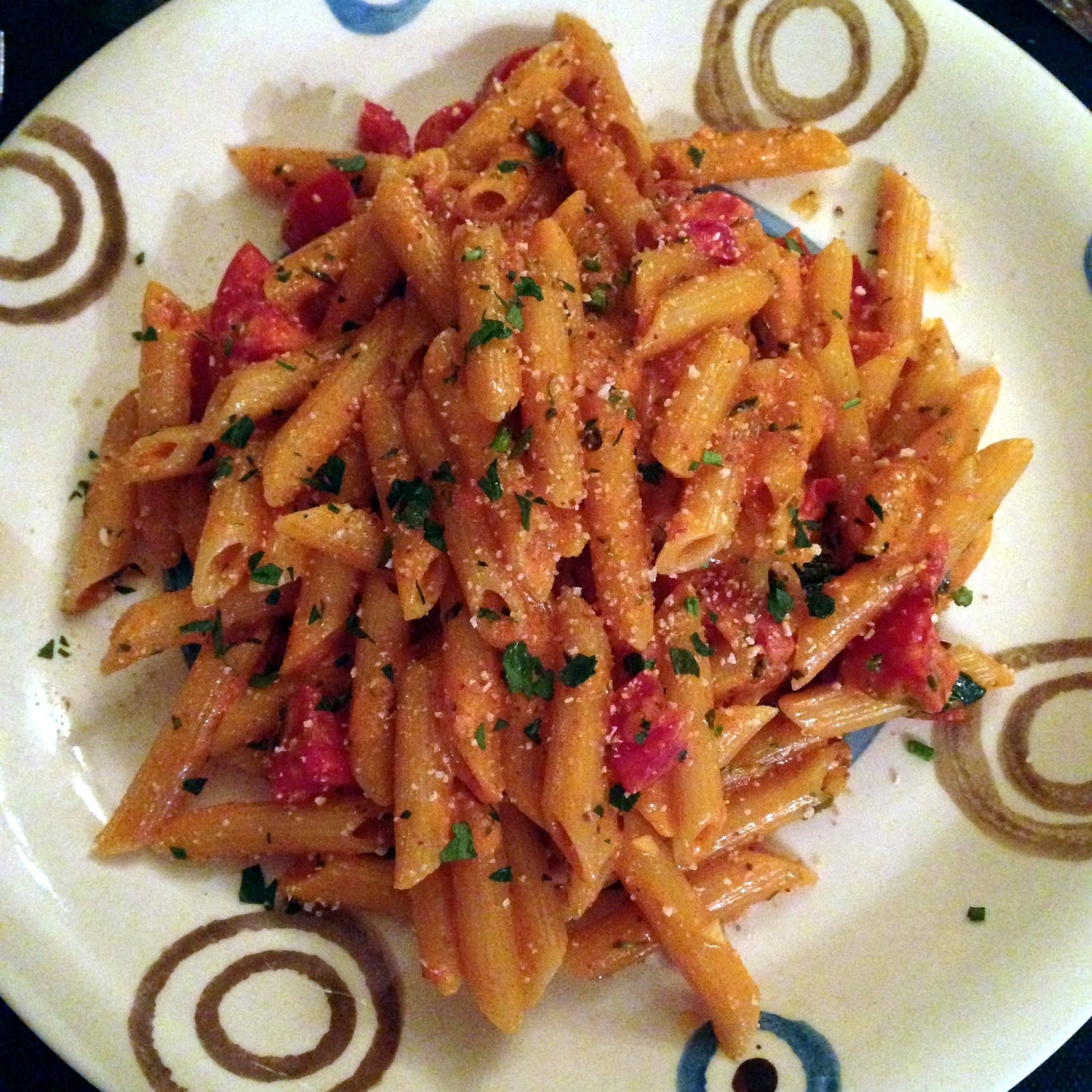
Our friend had recommended a dish with walnut pesto, but it just didn't sound good to me at the time. I figured ordering a dish named for the restaurant was probably a good choice, and I enjoyed my penne Nella (pasta in a tomato and cream sauce with herbs). 


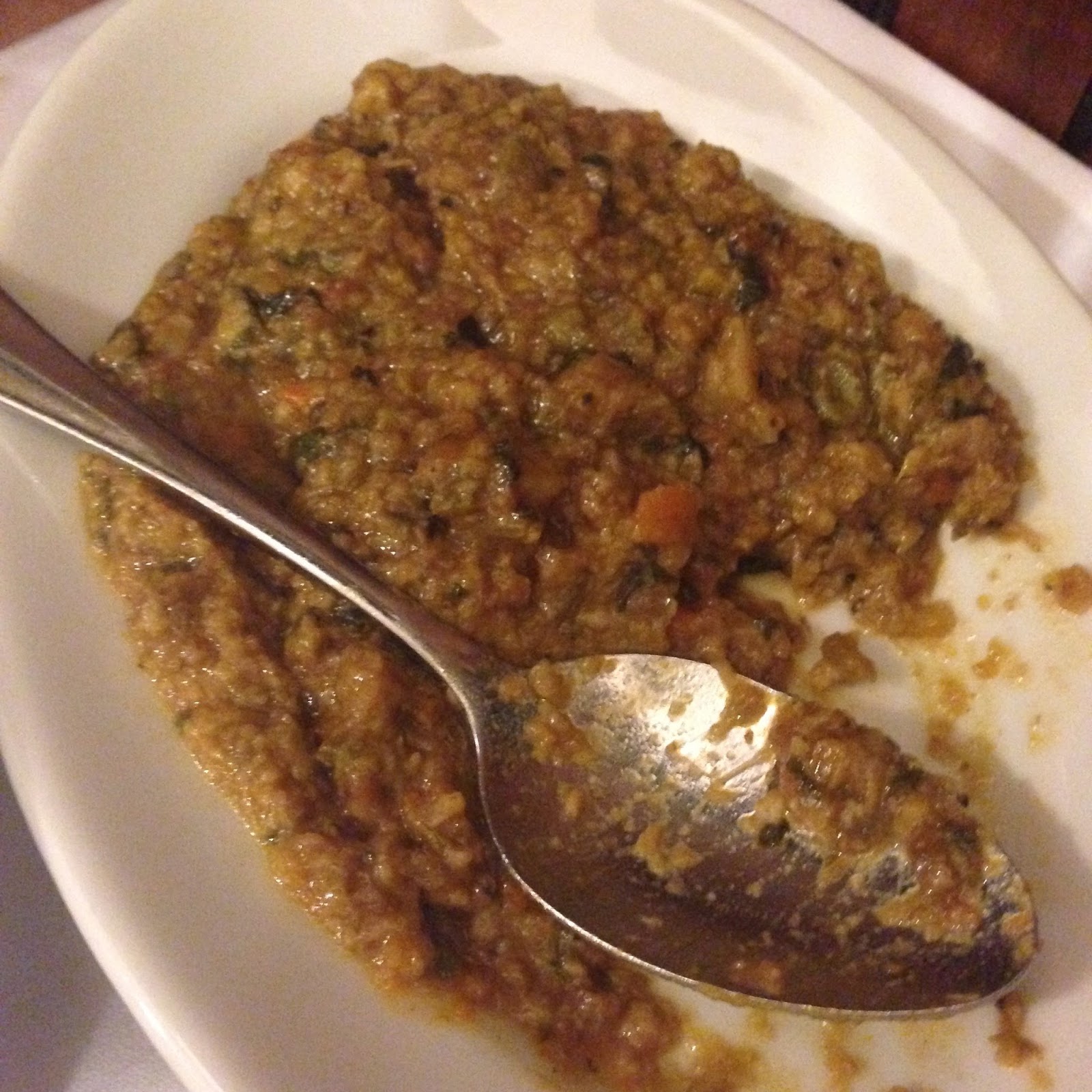
Our secondo was arista con patate--roast pork with potatoes. It was fairly unremarkable as I recall.


Our final experience with Tuscan food came on our last night of the trip, when we tried three different kinds of traditional soups. More on our dinner at Il Latini next week.

Tuesday, March 22, 2016

Florence Day 9: Mercato Centrale

In between exploring the Duomo and San Lorenzo on Tuesday, we took a lunch break to explore Mercato Centrale, Florence's central market. Endlessly interesting, packed with produce and meats, pastries, olive oils, honey, fish, cheeses, anything you can think of. I love experiencing this kind of place in a foreign country--the colors and smells, the fascinating people and products.


This vendor had a striking variety of honey flavors available to sample and buy--from acacia (very light) to melata (honeydew, very dark). We bought a couple of little jars to take home and compare.


The second story of Mercato Centrale is the most overwhelming food court you've ever seen. So. Many. Choices. 


We finally settled on La Pasta Fresca:

Steve got ravioli ripieni di burrata con pomodorini (ravioli stuffed with a soft cheese and served with little tomatoes):


I ordered linguine al pesto con patate e fagiolini. It definitely seemed strange to eat green beans and potatoes in my pasta, but it was delicious.


After leaving Mercato Centrale, we walked through the chaos of the open-air market (mostly leather and clothing) outside--you can see San Lorenzo in the distance. 


Florence is well-known for its leather goods (I'm still kicking myself for not buying a belt while we were there!) and we found sellers hawking handbags and belts *everywhere*. Here's another collection of them at Mercato Nuovo, Florence's "New Market"--and by "new" they mean 1551.


We also did a little wine shopping--wine in Italy is crazy-cheap compared to here, and Steve wanted to bring back a few bottles. Since we've been home, Steve has been amazed at how a glass of Chianti Classico or a Super Tuscan, with their specific flavors and smells, take him right back to our trip :)